
What Is a Sewer Scope Inspection?
A sewer scope inspection is a specialized inspection that uses a camera to evaluate the interior condition of a home's main sewer lateral. This underground piping carries wastewater away from the home toward the municipal sewer connection or private septic system.
Unlike a traditional home inspection, which evaluates visible and accessible plumbing components, a sewer scope allows inspectors to examine portions of the underground sewer line that would otherwise remain hidden.
At Spyglass Home Inspections, we use specialized camera equipment to help identify visible defects, obstructions, and deterioration that could lead to costly plumbing repairs or unexpected sewer backups.
Whether you're purchasing a home or evaluating an existing property, a sewer scope inspection can provide valuable information about an important system that is often overlooked.
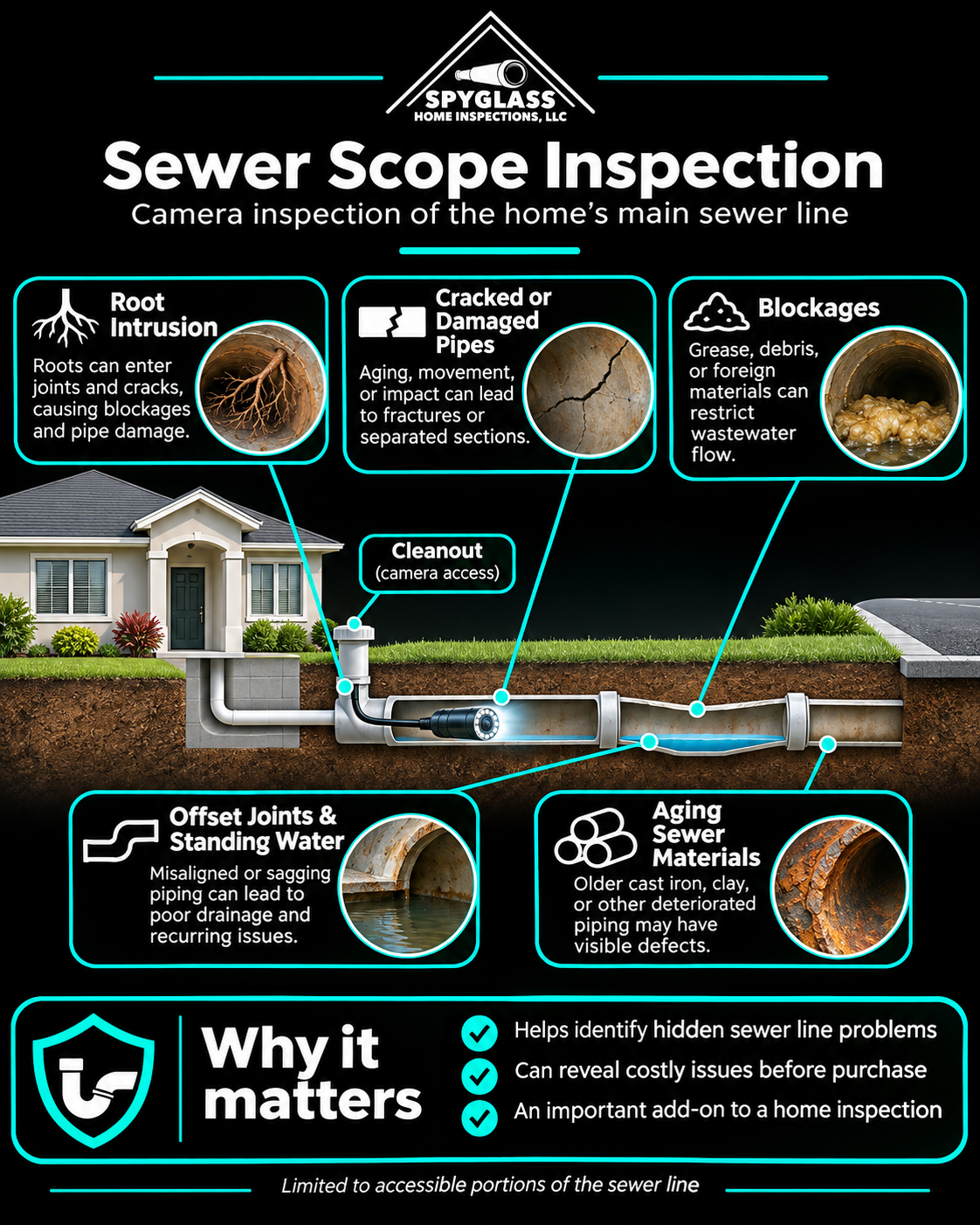
What Does a Sewer Scope Inspection Look For?
1. Tree Root Intrusion
Tree and plant roots can enter underground sewer piping through cracks, damaged joints, or other openings. As roots grow, they may restrict wastewater flow, contribute to recurring blockages, or cause additional pipe damage.
2. Cracked or Damaged Pipes
Underground sewer lines may develop cracks, fractures, separations, or other damage from aging, soil movement, or external forces. A camera inspection can help identify visible damage that may warrant further evaluation or repair.
3. Blockages and Obstructions
Accumulations of grease, debris, foreign materials, or other obstructions can restrict wastewater flow. Sewer scope inspections help identify visible restrictions that may contribute to slow drainage or sewage backups.
4. Offset Joints and Standing Water
Misaligned pipe connections and areas of standing water may indicate improper drainage conditions, pipe movement, or sagging sections of sewer piping. These conditions can increase the potential for recurring obstructions and drainage concerns.
5. Aging and Deteriorated Piping
Older homes may contain cast iron, clay, or other sewer piping materials that can deteriorate over time. Inspectors evaluate accessible portions of the sewer lateral for visible corrosion, scaling, deterioration, and other concerns that may affect its condition.
How Is a Sewer Scope Inspection Performed?
During a sewer scope inspection, a specialized camera is introduced into the sewer lateral through an accessible cleanout or another suitable access point.
The camera provides a visual examination of accessible portions of the pipe's interior, allowing the inspector to document observed conditions and identify potential concerns.
Inspection findings are documented, with supporting camera imagery when available. Conditions requiring additional investigation or correction may be referred to a qualified plumbing contractor.
Inspection Limitations: Sewer scope inspections are limited to accessible portions of the piping that the camera can safely navigate. Blockages, pipe configurations, inaccessible cleanouts, and other conditions may prevent a complete evaluation. A sewer scope inspection does not guarantee that the piping is free of concealed defects or leaks and does not replace a comprehensive plumbing evaluation when warranted.